

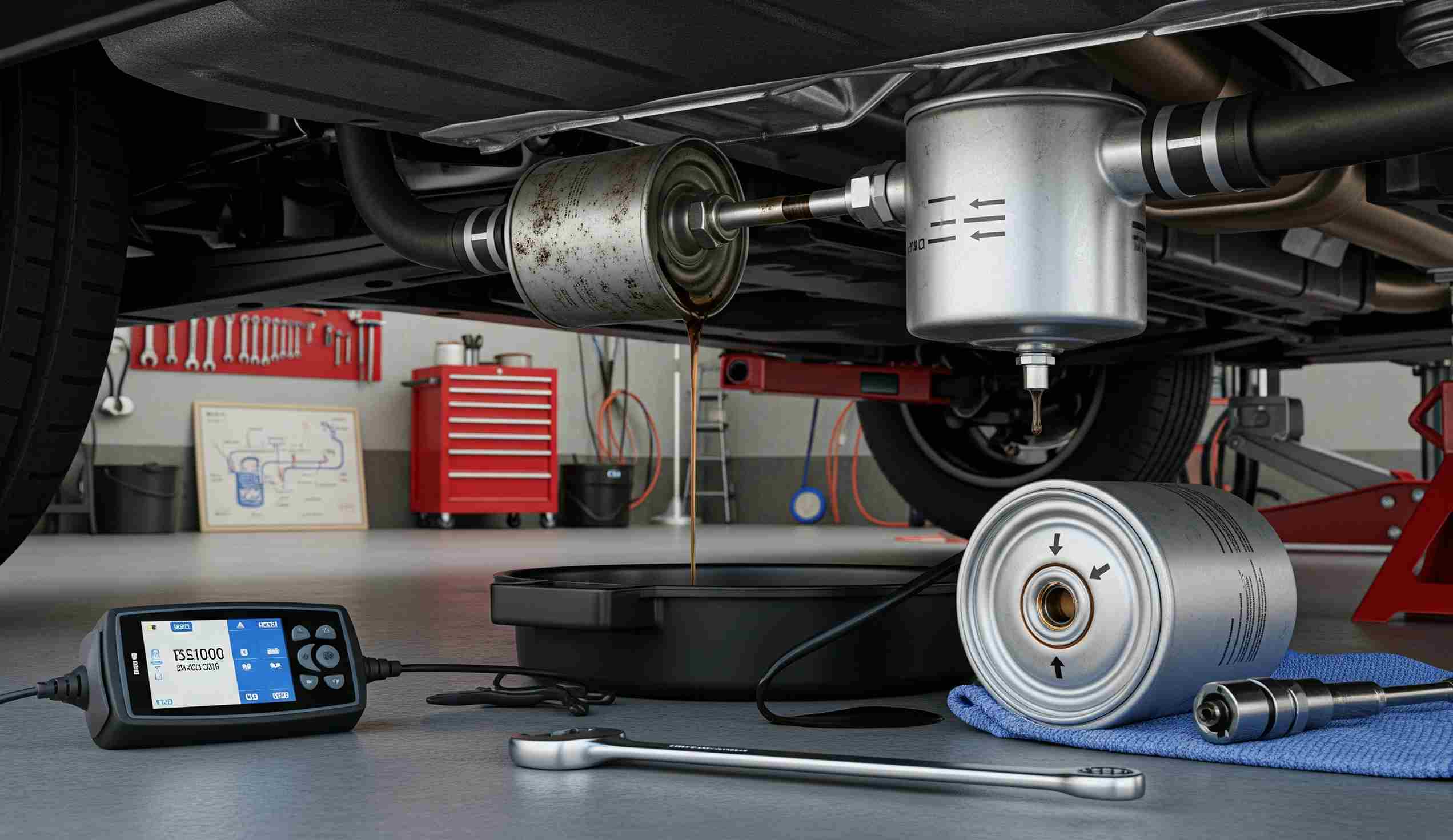
Ever pop the hood and notice your check engine light blinking with the P0171 trouble code? Don’t worry — you’re not alone, and fixing it is easier than you think. Rest assured, with the right steps, you can replace your fuel filter and get your engine running smoothly again. I’m here to guide you through every stage, ensuring a clear, detailed process so you can confidently tackle this repair.
In this article, you’ll learn how to replace your fuel filter specifically to troubleshoot and fix the P0171 code, which indicates a “System Too Lean” condition in Bank 1. Replacing the fuel filter is a crucial step since a clogged filter can restrict fuel flow, causing engine performance issues and triggering diagnostic trouble codes like P0171. I’ll provide a comprehensive, step-by-step guide, tips for success, common mistakes to avoid, and insights into related vehicle variations.
Ready to dive in? By the end, you’ll understand exactly how to replace your fuel filter efficiently, ensuring your vehicle’s fuel system stays healthy and your engine performs at its best.
What Is a Fuel Filter and Why Is It Important?
The fuel filter acts as a barrier, trapping dirt, rust, and other impurities from your fuel before it reaches the engine. This simple part plays a big role in maintaining optimal engine performance and fuel efficiency.
Key Terms Defined
- Fuel Filter: A device that screens out debris from fuel before it reaches the engine.
- P0171 Code: OBD2 code indicating “System Too Lean” on Bank 1, often caused by insufficient fuel delivery.
- Bank 1: The side of the engine with cylinder 1, relevant in V-type engines.
- Fuel System: All components that deliver fuel from the tank to the engine.
Why Replacing the Fuel Filter Matters
A clogged or dirty fuel filter disrupts fuel flow, causing lean conditions, misfires, poor acceleration, or stalling—all factors that can trigger P0171. Replacing the filter can restore proper fuel pressure, improve engine performance, and resolve the trouble code without costly repairs.
Step-by-Step Guide to Replacing the Fuel Filter to Fix P0171
Tools and Materials Needed
- New Fuel Filter (OEM or high-quality aftermarket)
- Socket set
- Screwdrivers (flat and Phillips)
- Pliers
- Fuel line disconnect tool (if applicable)
- Catch basin or container (for fuel draining)
- Safety gloves and goggles
- Car jack and jack stands (if necessary for access)
Safety Precautions
- Always work in a well-ventilated area.
- Relieve fuel system pressure before disconnecting lines.
- Use safety gloves and goggles to prevent fuel contact.
- Keep a fire extinguisher nearby; fuel is highly flammable.
Detailed Replacement Steps
| Step | Action | Details | Tips |
|---|---|---|---|
| 1 | Locate the fuel filter | Depending on your vehicle, it may be under the car near the fuel tank or under the hood. Use your owner’s manual for precise location. | In most vehicles, the fuel filter is either an inline filter on the fuel line or a cartridge-type filter on the fuel rail. |
| 2 | Relieve fuel system pressure | Remove the fuel pump relay or fuse, start the engine and let it run until it stalls. Repeat if necessary. | This prevents fuel spray, reducing fire risk during removal. |
| 3 | Disconnect the negative battery terminal | Safety first—disconnecting the battery minimizes electrical sparks. | Wear protective gear and handle car electronics carefully. |
| 4 | Access and remove the old fuel filter | Use appropriate tools to disconnect fuel lines and mounting brackets. | Place a catch basin beneath the filter to trap fuel. |
| 5 | Install the new fuel filter | Connect fuel lines securely, ensuring proper flow direction marked on the filter. | Make sure clips or clamps are tight to prevent leaks. |
| 6 | Reinstall components and restore power | Reconnect fuel pump fuse, battery, and double-check connections. | Turn the ignition to “ON” (without starting) to prime the fuel system and check for leaks. |
| 7 | Start the engine and check | Observe for leaks and proper operation. Clear any stored codes using an OBD2 scanner if necessary. | Test drive the vehicle to confirm the resolution of P0171 code and smooth engine performance. |
Summary of Action Point
Replacing your fuel filter is a proven method to address P0171. Follow these steps carefully, prioritize safety, and you’ll restore proper fuel delivery in no time.
Tips for Success
- Always use the correct replacement fuel filter specific to your vehicle model.
- Check the fuel filter’s direction arrow before installation.
- Use fresh clamps or clips for a tight fit.
- Consider replacing the fuel filter during regular maintenance intervals (generally every 30,000 to 50,000 miles).
- After installation, clear any stored codes with an OBD2 scanner and test drive.
Common Mistakes and How to Avoid Them
| Mistake | Potential Consequence | How to Avoid |
|---|---|---|
| Using incompatible parts | Leaks or system failure | Verify part numbers and consult your manual. |
| Not relieving fuel system pressure | Fuel spray and fire hazard | Follow proper pressure-relief steps before removal. |
| Ignoring safety precautions | injury or fire | Wear safety gear, work in ventilated areas. |
| Rushing the process | Damage or leaks | Take your time, double-check connections. |
| Not inspecting or replacing related components | Future issues | Check fuel lines, fuel pump, and injectors for wear. |
Variations in Fuel Filter Replacement
Different vehicle makes and models have varying layouts for fuel filter location and replacement procedures. For example:
- Inline fuel filters: Usually located along the fuel line under the vehicle.
- Cartridge-style filters: Often found inside the fuel tank or under the hood near the engine.
- Diesel vehicles: Might have different filter setups, including water separators.
Always consult your vehicle’s service manual for precise instructions tailored to your vehicle’s make and model.
Why Replacing the Fuel Filter Matters: The Bigger Picture
The importance of a clean fuel filter goes beyond just fixing P0171. Maintaining it ensures efficient fuel combustion, reduces emissions, and prolongs engine life. Neglecting this simple maintenance task can lead to more severe issues like fuel pump failure or damaged injectors, which are costly to repair.
In cases where replacing the fuel filter doesn’t resolve the P0171 trouble code, consider further diagnostics—such as checking fuel pressure, inspecting the fuel pump, or examining the intake system for leaks. Sometimes, the cause might extend beyond the filter itself.
Final Thoughts
Replacing your fuel filter to fix P0171 isn’t just about clearing codes—it’s about maintaining a healthy, efficient fuel system that keeps your engine running smoothly. Doing this repair yourself can save money and give you peace of mind knowing your vehicle is in top shape. Remember, safety first: work methodically, use the right tools, and double-check every step.
With a little patience and attention to detail, you’ll have your vehicle back in prime condition, ready to hit the road. If you experience any doubts or persistent issues, don’t hesitate to consult a professional mechanic. Good luck, and happy driving!
