

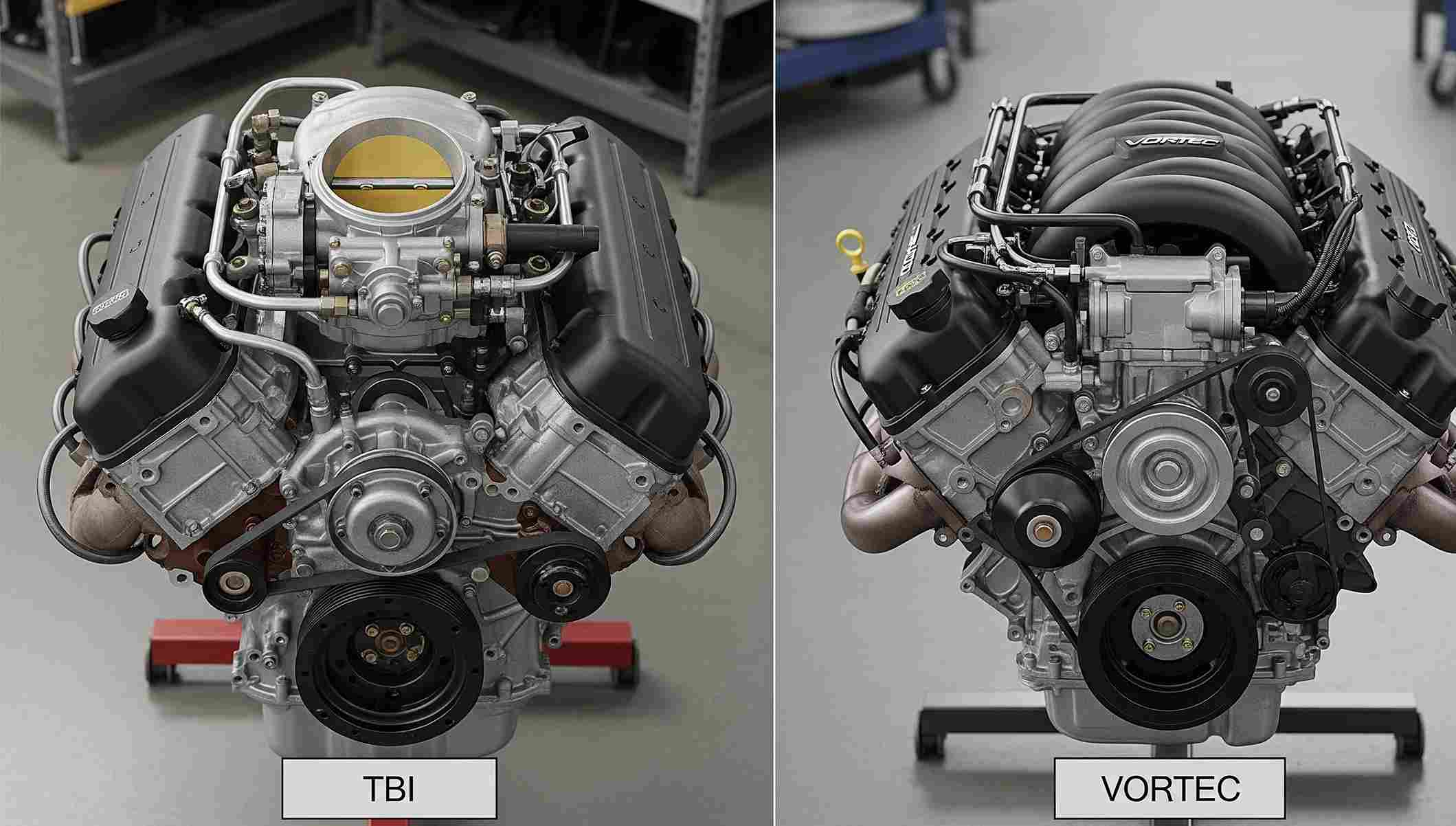
If you’re delving into the world of Chevy engines, you’ve probably come across the terms 5.7 TBI and 5.7 Vortec. These engines are fundamental in many Chevrolet trucks and vans, but what exactly sets them apart? Rest assured, I’ll guide you through every nuance to help you make informed decisions or understand your vehicle better.
So, what is the difference between a 5.7 TBI and a 5.7 Vortec? Simply put, the 5.7 TBI (Throttle Body Injection) is an earlier fuel delivery system utilizing a central throttle body with port injection, whereas the 5.7 Vortec features advanced technology with a redesigned cylinder head that improves airflow, fuel efficiency, and power output. This distinction impacts performance, reliability, and maintenance needs.
Stay with me, as I’ll break down how these engines compare across various aspects, including design, performance, maintenance, and real-world applications. You’ll learn which engine might suit your needs better and why understanding these differences matters.
What is the 5.7 TBI Engine?
Definition:
The 5.7 TBI (Throttle Body Injection) engine was one of Chevrolet’s early fuel-injected engines introduced during the late 1980s and early 1990s. It uses a single throttle body to deliver fuel directly into the intake manifold, replacing previous carburetor designs. Its simplicity paved the way for more modern systems.
Key Features:
- Fuel Delivery System: Throttle Body Injection, with a single injector mounted in the throttle body
- Engine Block: Based on traditional small-block Chevy design
- Displacement: 5.7 liters (350 cubic inches)
- Year Range: Mostly 1987-1995
Pros and Cons:
- Advantages: Easier to maintain, ample parts availability, decent reliability for its time
- Disadvantages: Less efficient fuel combustion, lower power output compared to newer designs, potential for older parts wear
What is the 5.7 Vortec Engine?
Definition:
The 5.7 Vortec, introduced in the early 1990s, was a significant upgrade over the TBI system. It features redesigned cylinder heads called Vortec heads, which increase airflow and fuel atomization, yielding more power and efficiency while maintaining the same engine displacement.
Key Features:
- Cylinder Heads: Vortec-style heads with larger intake ports and better airflow
- Fuel Delivery System: Still using port injection but with improved technology
- Performance Boost: Increased horsepower and torque
- Year Range: Mostly 1996-2002
Advantages:
- Better airflow leads to more power and torque
- Improved fuel efficiency
- Enhanced reliability with modernized components
- Compatible with automatic and manual transmissions
Comparing 5.7 TBI and 5.7 Vortec
| Feature | 5.7 TBI | 5.7 Vortec |
|---|---|---|
| Introduction Year | 1987 | 1996 |
| Cylinder Head Design | Traditional small-block Chevy heads | Vortec heads with improved airflow |
| Power Output | ~210-255 HP (varies by model) | ~285-350 HP (varies by application) |
| Torque | Around 330-380 lb-ft | Around 330-380 lb-ft |
| Fuel System | Throttle Body Injector | Multi-port Fuel Injection |
| Max RPM | About 4,000 RPM | About 5,200 RPM |
| Fuel Efficiency | Moderate | Slightly better |
| Maintenance & Reliability | Simpler, older tech | More modern, better design |
Performance & Power Differences:
While both engines share the same 5.7-liter displacement, the Vortec’s advanced airflow technology translates into better performance figures and efficiency. For example, in truck applications, the Vortec can produce about 75 to 100 more horsepower.
Why Does This Matter?
Knowing which engine variant is in your vehicle or which one you should consider for a rebuild is crucial. The Vortec engines can offer improved performance, better fuel economy, and longevity, whereas the TBI engines might be easier and cheaper to work on for basic repairs. Plus, the later Vortec units are more compatible with modern upgrades, making them a better choice for customization or performance tuning.
Tips for Success When Choosing or Maintaining These Engines
- Always verify the engine’s specific model year and configuration before purchase or repair.
- Use high-quality replacement parts to sustain performance—especially important for Vortec heads and injectors.
- Invest in a good tune-up: Optimizing fuel maps and ignition timing can make a big difference.
- Regular maintenance: Keep fuel filters, spark plugs, and injectors clean.
- Upgrade components gradually if you’re looking for more power—consider headers, intake, or ECU tuning.
Common Mistakes and How to Avoid Them
- Confusing engine models: Always check the engine’s serial number or casting date to identify if it’s TBI or Vortec.
- Ignoring maintenance: Both engines benefit from regular care; neglect can lead to performance decline.
- Overlooking compatibility: When upgrading parts, ensure they fit the specific engine variant to avoid damage or poor performance.
- Assuming all 5.7 engines are the same: Variations in year, model, and configuration mean they aren’t interchangeable without modifications.
Variations & Similar Engines
- 6.5L Diesel Vortec: Similar head design but diesel-powered
- Small Block Chevy Engines: Other displacements like 4.3L or 5.3L, sharing similar architecture
- Later Gen Vortec Engines: 4.8L and 5.3L Vortecs, sharing technological advancements
Why Understanding These Differences Matters
Choosing the right engine—or knowing what you’re working with—can extend the lifespan of your vehicle, improve your driving experience, and save money on repairs or upgrades. Whether you’re restoring a classic truck or tuning for performance, clarity on TBI vs. Vortec is essential.
In conclusion, understanding the differences between the 5.7 TBI and 5.7 Vortec engines is more than just technical trivia. It impacts your maintenance choices, upgrade options, and vehicle performance. I hope this guide has cleared up some confusion and empowered you with the knowledge to make smarter decisions about your Chevy engine. Remember, being informed makes all the difference in keeping your vehicle running smooth and reliable.
If you’re considering a rebuild, upgrade, or purchase, always double-check the engine specifications. Keep your engine in prime condition—your ride will thank you!
