

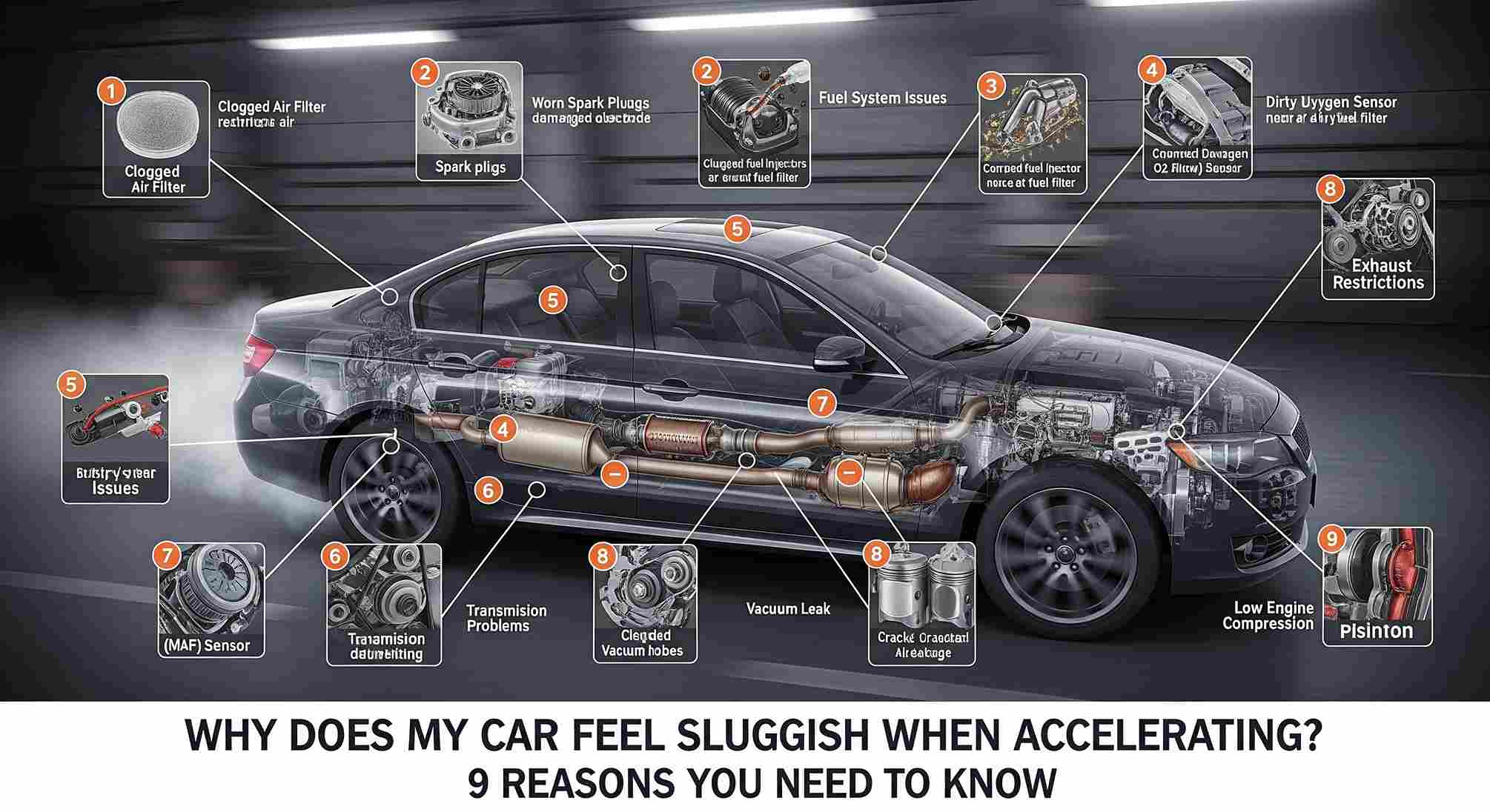
Ever stepped on the gas pedal and felt your car lag instead of roar into action? If your vehicle feels sluggish when accelerating, don’t worry—you’re not alone. As a seasoned automotive enthusiast and mechanic, I can tell you that many drivers face this issue, and understanding the root causes can save you time, money, and frustration.
In this article, I’ll break down the most common reasons behind a sluggish acceleration — from minor hiccups to major repairs. Whether your car feels like it’s dragging its feet or simply isn’t performing as it used to, this guide will help you diagnose the problem quickly and accurately.
Stay tuned, because by the end, you’ll know exactly what might be causing your car to feel sluggish and how to fix it yourself or when to seek professional help.
What Causes a Car to Feel Sluggish When Accelerating?
When your car struggles to pick up speed, it’s often a sign that something isn’t working properly. The causes can range from simple maintenance issues to more complex mechanical faults. It’s essential to understand the specific system involved because fixing the root cause leads to better performance and safer driving.
Here’s a comprehensive look at the nine most common reasons your car feels sluggish during acceleration, complete with explanations, warning signs, and fixes.
1. Dirty or Faulty Air Filter
What It Is:
The air filter prevents dirt and debris from entering the engine. A dirty or clogged air filter restricts airflow, which hampers engine performance.
Why It Matters:
Clean airflow is critical for the combustion process. When airflow is restricted, the engine cannot produce the necessary power for smooth acceleration.
Symptoms:
- Reduced power during acceleration
- Black smoke from exhaust
- Engine stalling or rough idling
How to Fix:
- Inspect and replace the air filter every 12,000 to 15,000 miles or as recommended.
- Use a high-quality filter appropriate for your vehicle model.
Tips for Success:
- Check the air filter regularly, especially if driving in dusty areas.
- Keep a spare filter in your car for quick replacements.
2. Clogged Fuel Injectors or Fuel Filter
What They Are:
- Fuel Injectors: Spray fuel into the engine’s combustion chambers.
- Fuel Filter: Keeps debris from reaching the injectors.
Why They Matter:
Clogged injectors or filters reduce fuel flow, leading to poor acceleration and engine hesitation.
Symptoms:
- Loss of power especially under load
- Engine misfires
- Poor fuel economy
How to Fix:
- Use fuel system cleaners periodically.
- Replace the fuel filter every 30,000 miles or as specified.
- Consider professional cleaning for injectors if clogging persists.
3. Bad Spark Plugs or Ignition System
What They Are:
Spark plugs ignite the air-fuel mixture in your engine.
Why It Matters:
Worn or fouled spark plugs cause incomplete combustion, resulting in sluggish performance.
Symptoms:
- Engine misfiring
- Hard starting
- Rough idling
How to Fix:
- Replace spark plugs at regular intervals (usually every 30,000 to 50,000 miles).
- Check ignition wires and coils for faults.
4. Exhaust System Blockages or Catalytic Converter Issues
What They Are:
The catalytic converter reduces emissions but can become clogged.
Why It Matters:
A clogged converter causes back pressure, hampering engine power.
Symptoms:
- Decreased acceleration
- Overheating exhaust
- Unpleasant odor from exhaust
How to Fix:
- Use exhaust system cleaners for minor blockages.
- Replace or professionally clean the catalytic converter if necessary.
5. Transmission Problems
What It Is:
Transmission transfers power from the engine to the wheels.
Why It Matters:
Problems here directly impact acceleration and vehicle response.
Symptoms:
- Slipping gears
- Delayed engagement
- Burning smell or fluid leaks
How to Fix:
- Check transmission fluid levels regularly.
- Replace or flush transmission fluid as per manufacturer instructions.
- Seek professional diagnostics if issues persist.
6. Low or Old Transmission Fluid
What It Is:
Transmission fluid lubricates moving parts within the transmission.
Why It Matters:
Old or low fluid reduces efficiency, leading to sluggish acceleration.
Symptoms:
- Gear shifting issues
- Overheating transmission
- Unusual noises during gear change
How to Fix:
- Check fluid levels monthly.
- Change fluid every 30,000 to 60,000 miles or as recommended.
7. Sensor Issues (Mass Airflow Sensor or Oxygen Sensors)
What They Are:
Sensors monitor various engine parameters to optimize performance.
Why It Matters:
Faulty sensors send incorrect data, causing the engine to run poorly.
Symptoms:
- Check engine light on
- Poor fuel economy
- Hesitation during acceleration
How to Fix:
- Use an OBD-II scanner to diagnose sensor faults.
- Replace sensors as needed.
8. Vacuum Leaks
What They Are:
Leaks in vacuum hoses allow unmetered air into the engine.
Why It Matters:
Extra air disrupts the air-fuel mixture, leading to sluggish acceleration.
Symptoms:
- Rough idling
- High or unstable idle RPM
- Loss of power
How to Fix:
- Inspect vacuum hoses for cracks or disconnections.
- Replace damaged hoses.
9. Engine Compression Issues
What It Is:
Low compression reduces engine power.
Why It Matters:
It can be caused by worn piston rings, valves, or head gasket failures, drastically reducing performance.
Symptoms:
- Persistent loss of power
- Engine knocking
- Increased oil consumption
How to Fix:
- Conduct a compression test.
- Repair or rebuild the affected engine components.
Why It All Matters
Understanding these nine potential causes helps you avoid costly repairs down the line. A sluggish car isn’t just annoying—it can also be unsafe. Regular maintenance and prompt repairs ensure your vehicle performs at its best, providing safer and more efficient driving.
Tips for Maintaining Optimal Acceleration
- Keep up with scheduled maintenance.
- Check fluid levels regularly.
- Use quality fuel and lubricants.
- Pay attention to warning signs and address issues early.
- Consider professional diagnostics if uncertain.
Common Mistakes to Avoid
| Mistake | Why It’s a Problem | How to Avoid It |
|---|---|---|
| Ignoring check engine lights | Can indicate serious underlying issues | Use an OBD-II scanner promptly |
| Neglecting regular filter changes | Leads to restricted airflow | Follow manufacturer’s maintenance schedule |
| Using poor-quality fuel | Causes clogging and performance issues | Decide on reputable fuel brands |
| Delaying repairs | Worsens damage and costs | Address problems as soon as they appear |
Variations and Additional Insights
- Hybrid and Electric Vehicles: These have different acceleration dynamics, but many issues like sensors or filters still apply.
- Performance Upgrades: Modifications like cold air intakes or tuner chips can influence acceleration.
- Driving Habits: Aggressive driving can wear out components faster, affecting acceleration performance.
Conclusion
Feeling that your car is sluggish when accelerating can stem from several factors, from simple maintenance needs to complex mechanical issues. Knowing what to look for empowers you to take swift action, ensuring your vehicle remains responsive, efficient, and safe.
Remember, regular checks are your best defense against unexpected performance drops. If you’re ever in doubt, consult a professional to diagnose and fix the problem properly. Your car’s health directly impacts your safety and driving pleasure—so stay vigilant and proactive!
Drive smarter, stay safe, and keep your vehicle performing at its peak!
